

Sponsored ContentChris ThomsonWed 24 Jun 26
Parks Not Buildings Will be What I’m Remembered for: Developer

Underscoring the increasing prominence of nature in the property sector, an Adelaide developer has said that when he dies he’ll be remembered more for his parks than his buildings.
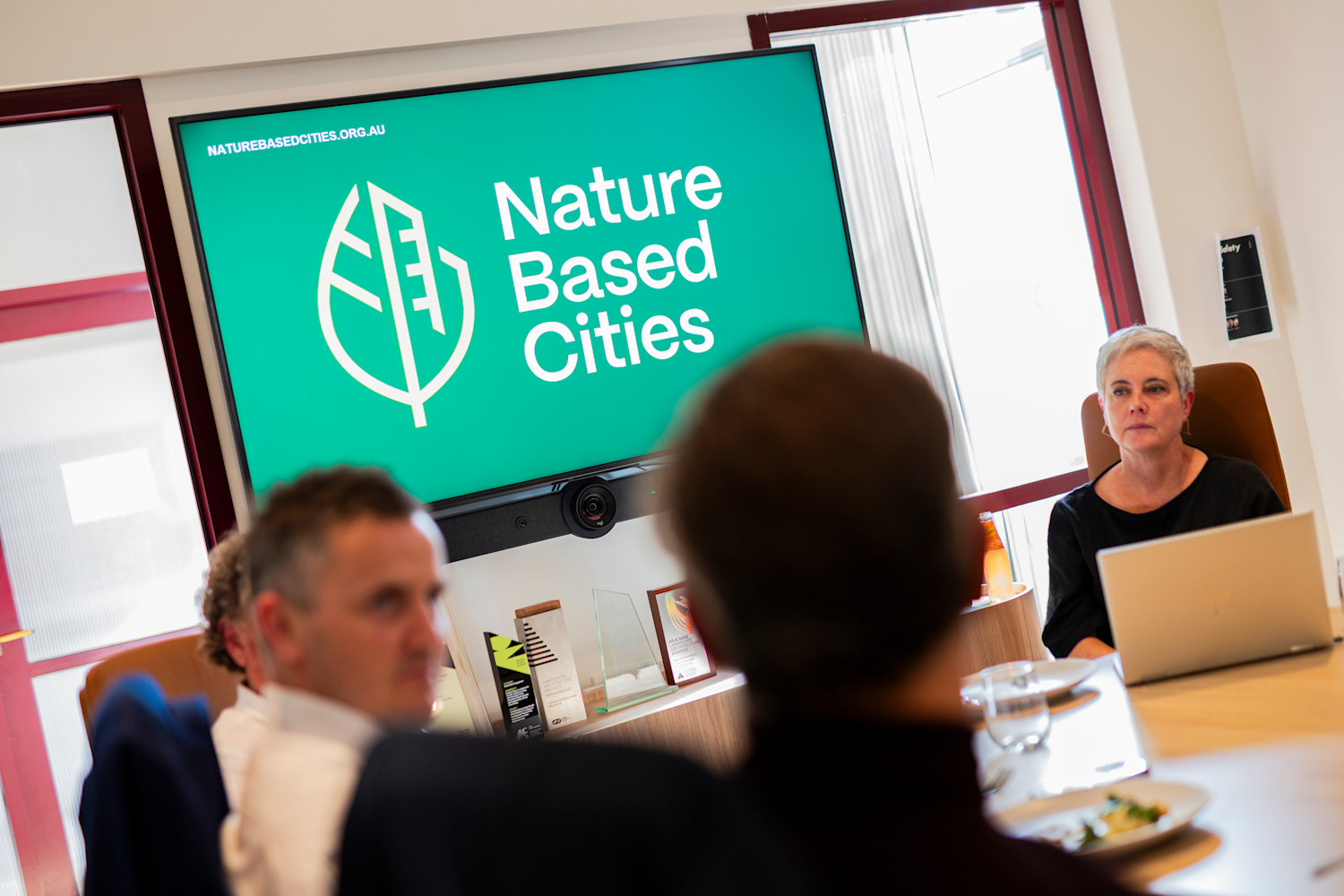
Speaking at The Urban Developer nature based cities roundtable in Adelaide this month, Kite Projects managing director Damon Nagel said designing with nature was a big passion of his.
“We’ve delivered over 120,000sq m of public open space across two developments,” he said.
“I think, ironically, when I die I’ll be remembered for my parks, not my buildings.”
Nagel said Kite’s Hamilton Hill project at the foot of the Adelaide hills (pictured top) was “an absolute legacy”.
The development retains a 6ha park with walking and cycling trails leading to the adjacent Morialta conservation park.

At the roundtable, advisory council member of the not-for-profit Nature Based Cities organisation Jan Talacko said there had been a big focus in the past 15 years on reducing carbon emissions from development, particularly from buildings.
“But, certainly from a development perspective, we don’t think we’ve had enough focus on protecting nature and re-establishing nature in cities, and so this initiative is really to try and redress, to some extent, that balance, that we need both of those things to be working,” he said.
“So about four and a half years ago, we got together to start talking about this as an issue, and Nature Based Cities was set up to increase the amount of green space, improve biodiversity, integrate living landscapes into developments.”
Talacko said that in 2022 Australia signed up to the global biodiversity framework at the United Nations’ biodiversity conference in Montreal.
“That’s got a whole range of targets about biodiversity and species protection, and there is a specific target about increasing the quality of urban spaces and biodiversity in cities,” he said.
“Nature Based Cities is firmly aligned with the federal government’s vision, and it seems like that hasn’t really trickled down to the regulations and policies or frameworks, so we think [we can] assist in doing that.
“The initial focus of our efforts has been on residential development, initially medium and high-density development, but now [we have] launch[ed a] precinct scorecard for master planned communities.”
The scorecard for masterplanned communities, launched earlier this month, is for precinct-level greenfield or brownfield projects. The new scorecard puts a premium on retaining existing site features including the ecology, hydrology, landform, soil, geology and biodiversity.

Delivering a presentation on the scorecard for medium and high-density development, Nature Based Cities advisory council member Janis Fischer said that, after some initial independent research, the organisation started mapping out a list of targets developers would be able to achieve if they designed with nature in mind.
And that evolved into a scorecard.
“We can actually use this document as a way the development team can set their targets right from the start of the project and then they can use it once they’ve done their initial design to see how they’re performing against all the nature criteria,” she said.
The scorecard has 10 criteria—including views to green space, preservation of existing trees, planting of new trees, amount of canopy coverage and biodiversity—that are aligned to other rating tools.
“A lot of developers will also be doing green star buildings or other rating tools and you’re able to achieve your one or two points for Nature Based Cities but also you can use that towards your green star rating,” Fischer said.
“It’s a fairly simple process and we’ve been offering it for free to the early adopters so there’s no cost involved [for them] apart from any consultant time that might be required.
“And if you are accredited then you receive the rights to use the Nature Based Cities logos on your marketing material.”
Fischer said developers did not need to score a point in every category of the scorecard to gain accreditation.
“The minimum that we ask you to do is retain anything that is significant on the site and then you can gain points in the other categories,” she said.
She said that research commissioned by Nature Based Cities from Urbis found developers could achieve a large premium on apartment and home prices if projects incorporated a park or other suitable green space.
Further research, by Ark Resources, found that Australia’s existing ESD rating tools did not place sufficient emphasis on nature.
Developers interested in learning more about Nature Based Cities’ scorecards can visit naturebasedcities.org.au
The Urban Developer is proud to partner with Nature Based Cities to deliver this article to you. In doing so, we can continue to publish our daily news, information, insights and opinion to you, our valued readers.





